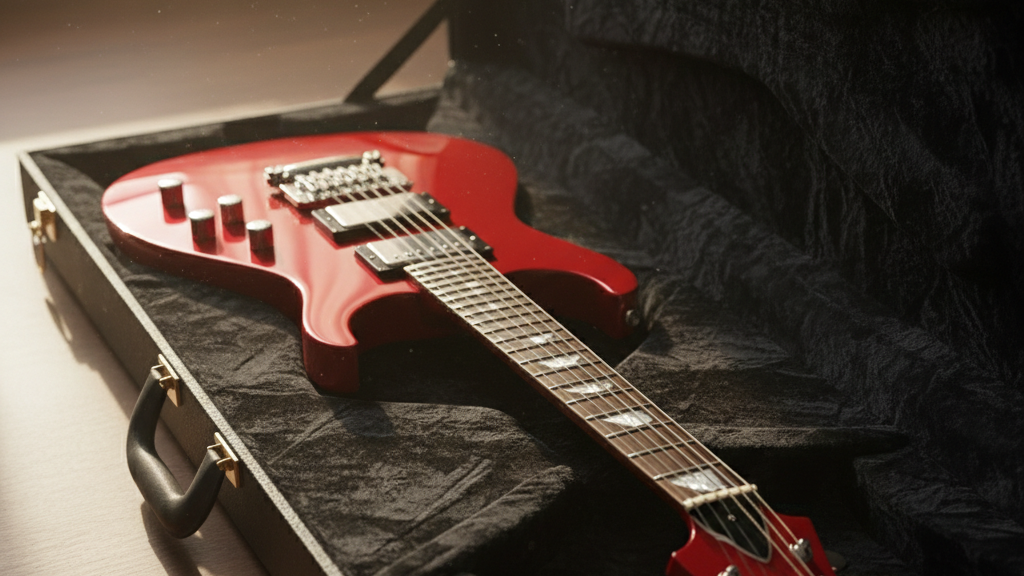
Thinking of picking up an electric guitar but feeling overwhelmed by the sheer number of options? Many aspiring musicians face this common dilemma. This article will help demystify the process, focusing on key considerations for beginners to find an instrument that inspires practice and growth, rather than frustration.
Understanding Your Budget and Sound Goals
Electric guitars range from a couple of hundred dollars to several thousand. For a beginner, a guitar in the $200-$500 range is often ideal. This budget typically offers instruments with decent playability and electronic components without a huge financial commitment. Think about the type of music you primarily want to play. Do you dream of searing rock solos, smooth jazz chords, or funky rhythm riffs? Different guitar types are often associated with different sounds, though versatility is common. For instance, a Fender Squier Stratocaster is a popular choice for its balanced sound and comfortable feel, great for blues, rock, and pop.
Key Features: Body Style, Pickups, and Neck Comfort
The electric guitar’s body style significantly impacts its feel and sometimes its sound. Solid-body guitars are the most common, like the iconic Fender Stratocaster or Gibson Les Paul. Semi-hollow and hollow-body guitars, while beautiful, are often favored by jazz and blues players and can be more prone to feedback at high volumes. For a beginner, a solid-body is a safe bet. Next, consider pickups – these magnetic devices convert string vibrations into electrical signals. Single-coil pickups (found on Stratocasters) offer a bright, clear sound, while humbuckers (common on Les Pauls) provide a thicker, warmer tone with less hum. Many guitars feature a combination of both for versatility. Finally, neck comfort is paramount. A thin, C-shaped neck is often easier for smaller hands or beginners to navigate. Try holding and “playing” (even if you can’t play notes yet) different neck profiles in a store to see what feels best. Too thick or too thin can quickly become uncomfortable.
Actionable Tips: Try Before You Buy and Factor in Essentials
The single most important tip: go to a local music store and *try* different guitars. Hold them, strum them (even unplugged), and see how they feel in your hands. Don’t be shy – store staff are usually happy to help beginners. This hands-on experience is invaluable and will tell you more than any online review. Also, remember that the guitar is just one part of the equation. You’ll need an amplifier, a cable, and picks to get started. Many manufacturers offer beginner “starter packs” that include a basic guitar, small amp, cable, picks, and sometimes even a gig bag and strap. While these are convenient, be aware that the quality of these components can vary. Sometimes buying a slightly better guitar and a separate small practice amp yields a more satisfying experience in the long run.
